
Frozen shoulder · Shoulder Artery Embolization (SAE)
Frozen shoulder can take years to thaw. It doesn't have to.
The standard path for frozen shoulder is months of physical therapy, repeated steroid injections, and waiting — often a year or more, and sometimes surgery under anesthesia. Shoulder artery embolization (SAE) treats the inflammation driving the pain directly, in a 30-minute outpatient procedure.
Reaching back for a seatbelt — and wincing? Months of stretches, and the arm still won't go. We hear it every day — and it's treatable.
Is this frozen shoulder?
SAE is often a good fit for frozen shoulder that isn't loosening on the usual timeline.
- ✔Frozen shoulder (adhesive capsulitis) — pain and stiffness for months
- ✔Physical therapy and steroid injections haven't restored your motion
- ✔Your shoulder is stiff, not just sore — the motion itself is limited
- ✔You want to avoid manipulation under anesthesia or capsular release surgery
- ✔Pain disrupts your sleep, reaching, or dressing
How SAE treats frozen shoulder
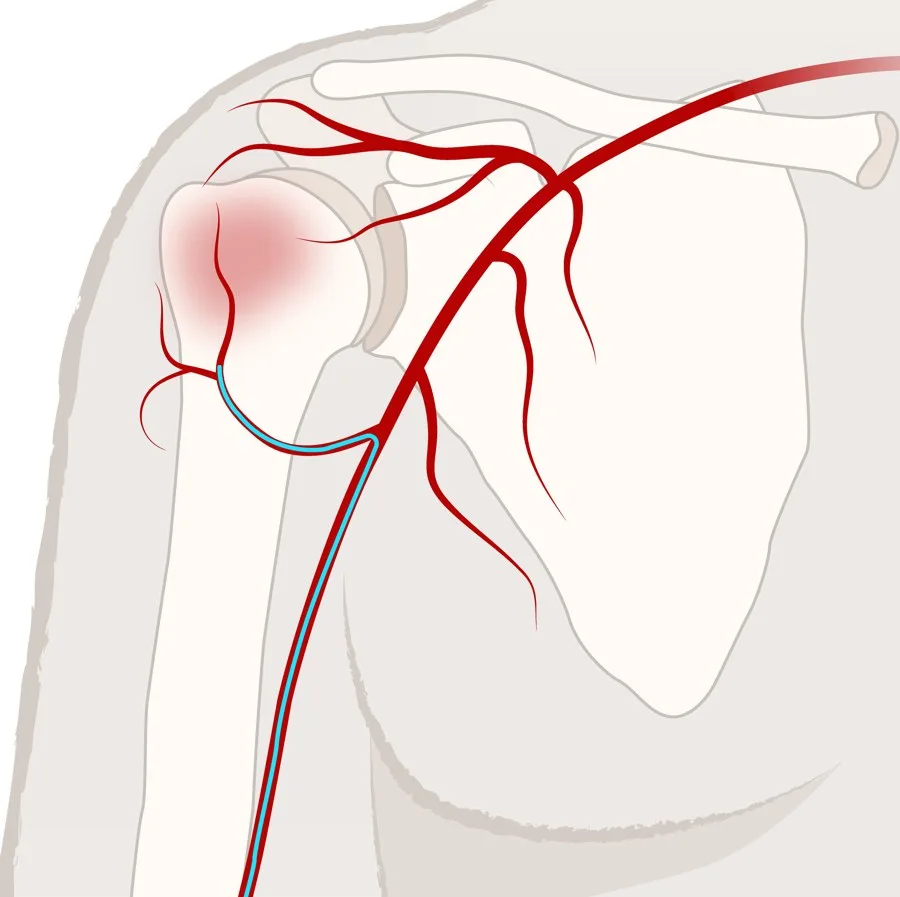
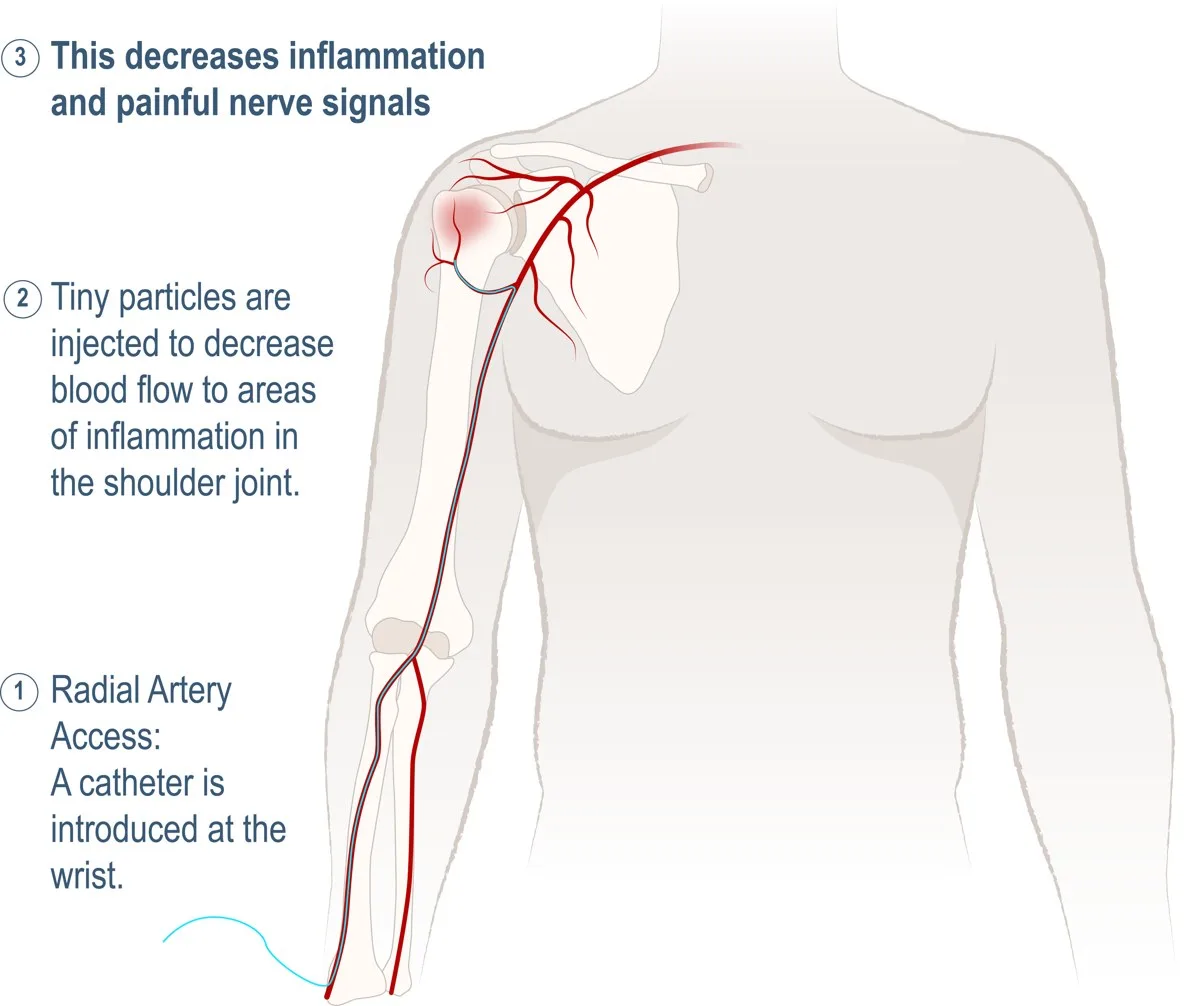
Like the knee and hip, a frozen shoulder grows tiny, abnormal blood vessels that feed ongoing inflammation in the joint capsule. During SAE, an interventional radiologist enters through a tiny pinhole at the wrist (radial artery access), guides a thin catheter to the arteries feeding the shoulder, and releases microscopic particles to reduce that abnormal blood flow.
No cutting, no implants, no general anesthesia — a ~30-minute outpatient procedure, home about an hour after, and back to normal activity the next day.
Why you've probably never heard of this
“Just keep doing your exercises.”
If you have frozen shoulder, you were almost certainly sent to physical therapy and told to be patient. That's the standard path — and for some people it works, eventually.
But it can take one to three years to run its course. Meanwhile you can't sleep on that side, can't reach a seatbelt, can't put on a coat without wincing. And when therapy and injections don't do it, the next thing offered is usually manipulation under anesthesia or surgery to cut the capsule.
Almost nobody is told there's a third option. Shoulder artery embolization is newer, it's done by interventional radiologists rather than orthopedic surgeons, and most patients only find out it exists because they went looking.
If you found this page, that's how you found out.
What makes someone a good fit
- ✔Frozen shoulder pain and stiffness for 3 months or more
- ✔You've done physical therapy and it hasn't restored your motion
- ✔Steroid injections helped briefly, or not at all
- ✔Night pain that wakes you or keeps you off that side
- ✔You'd rather not have manipulation under anesthesia or surgery
Frozen shoulder is also more common if you have diabetes or thyroid disease — and tends to be more stubborn in those cases.
Ready to stop waiting for your shoulder to thaw?
Take the 2-minute candidacy quiz or check your coverage. Private, no obligation. We accept Medicare and most commercial insurance.
See if I'm a candidate