
The procedure, explained simply
How joint embolization works
It sounds high-tech — and it is — but the idea is simple: calm the inflammation that's causing your pain, through a pinhole, with no surgery.
Finding the source
Chronic inflammation makes your body grow tiny, abnormal blood vessels in the joint — and they feed even more inflammation, a self-worsening cycle. Painful new nerves grow in alongside them. Your interventional radiologist maps these vessels using live imaging.
A pinhole, not an incision
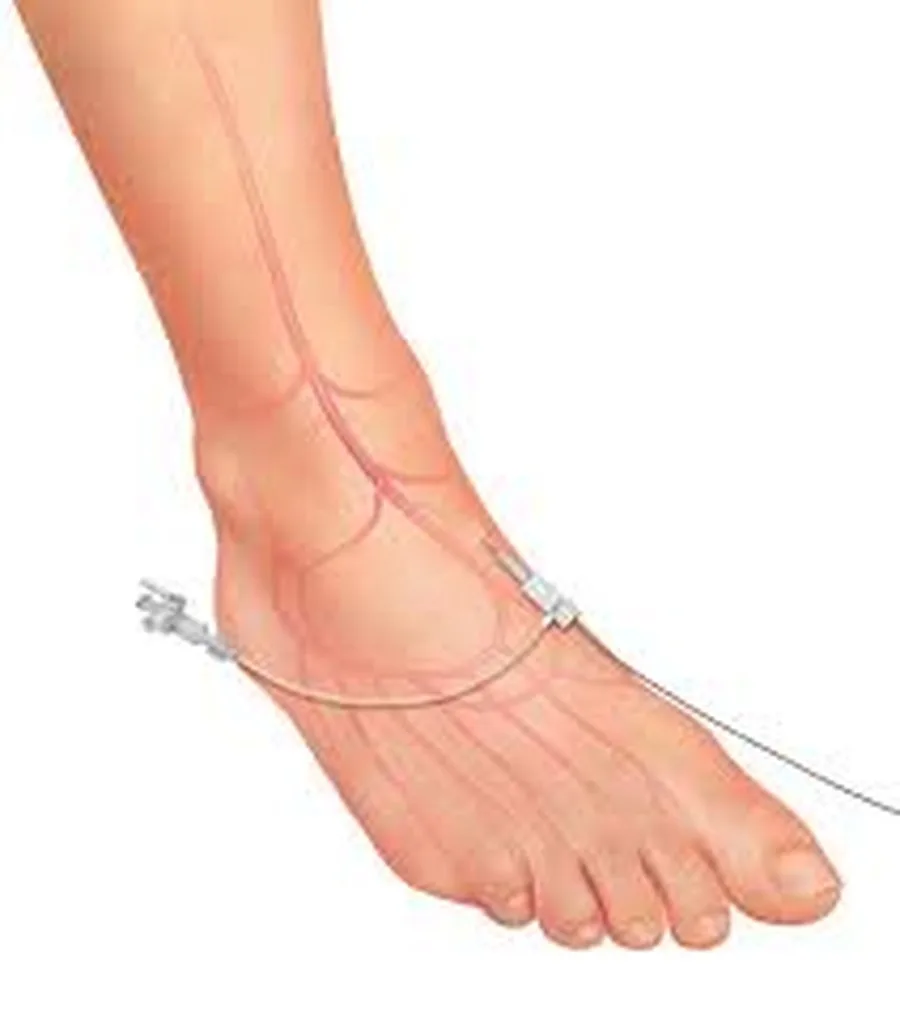
Through a tiny pinhole in the foot, a catheter thinner than a spaghetti noodle is guided up to the exact arteries feeding your pain. You're awake but relaxed with light sedation.
Calming the inflammation & pain
Microscopic particles are released to gently reduce the abnormal blood flow. That breaks the cycle — quieting both the inflammation and the painful nerves it was feeding, so the pain eases at its source.
Home in about an hour
The pinhole needs only a bandage. You head home about an hour after your procedure, and most people are back to normal activity the next day.
Relief that builds
As inflammation settles over the following weeks, many patients feel steadily improving pain relief. Results vary, and your team will follow up with you.
Your timeline, start to finish
Most of it happens in a single morning — and the relief keeps building for weeks.
Is it safe?
Embolization has been used in medicine for decades. For joints, it's minimally invasive with a strong safety profile.
No general anesthesia
Just light sedation and local numbing — lower risk than surgery under general anesthesia.
Precise & targeted
Live imaging lets the physician treat only the vessels causing pain, sparing healthy tissue.
Backed by evidence
Supported by growing clinical research and 2026 specialty-society guidance. Side effects are usually minor and temporary.